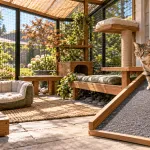
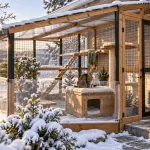
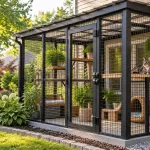
Building a predator-proof catio should feel reassuring, not like you are fortifying a tiny feline castle against the entire woodland neighborhood. With strong materials, closed gaps, a dig barrier, and clever locks, your cat can enjoy fresh air while you enjoy your coffee without staging a backyard rescue mission.
What Does Predator-Proofing a Catio Really Mean?
Predator-proofing means building a complete barrier that prevents wildlife from reaching, frightening, or trapping a cat from every direction. The walls, roof, floor, door, seams, and house connection must work as one secure system.
No outdoor structure can promise zero risk, but you can make the predictable risks much smaller with thoughtful construction. The friendly goal is humane exclusion: your cat stays cozy, wildlife keeps wandering, and nobody has to argue through the mesh.
Which Predators Should a Catio Resist?
A sturdy catio should resist the animals common to your region, including raccoons, coyotes, loose dogs, foxes, bobcats, snakes, and birds of prey. Small rodents may not hunt an adult cat, but they can enter for food and create stress, parasites, or frantic feline acrobatics.
Risk changes by neighborhood, season, and time of day, so your local guest list may be surprisingly lively. A quick call to animal control or a humane wildlife professional can help you choose the right mesh, foundation depth, and roof strength without guessing.
| Wildlife threat | Typical behavior | Best catio defense | What to inspect |
|---|---|---|---|
| Raccoons | Pull mesh, manipulate simple latches, climb | Heavy welded wire and two-step locks | Door corners, fasteners, latch play |
| Coyotes and loose dogs | Push, dig, bite, or ram weak panels | Rigid framing, secured roof, buried or outward apron | Lower frame, soil disturbance, flexing panels |
| Snakes | Enter through small ground-level openings | Fine lower mesh and sealed thresholds | Utility gaps, corners, drainage openings |
| Raptors | Approach from above | Fully enclosed rigid roof | Roof edges, storm damage, loose panels |
| Rodents | Squeeze through tiny gaps attracted by food | Small-opening mesh and no overnight food | Gnaw marks, droppings, spilled kibble |
What Mesh Keeps Claws and Teeth Out?
Use galvanized welded wire or high-quality hardware cloth attached to a rigid frame, not ordinary insect screen or lightweight chicken wire. For larger predators, 16-gauge welded wire with approximately one-inch openings is a strong benchmark, while smaller lower openings help discourage snakes and rodents.
Fasten mesh with exterior-rated screws and wide washers or secure structural staples placed closely enough to prevent flexing. Sandwiching mesh beneath wood battens makes finished edges stronger and hides sharp cut ends from paws, noses, and curious whiskers.

The Humane World for Animals wildlife-exclusion guide notes that weak quarter-inch screen will not withstand stronger animals such as raccoons and recommends heavy welded wire for demanding applications. Check local conditions with a qualified builder because snow, wind, salt air, and soil moisture can change which materials last.
How Do You Stop Predators From Digging Under a Catio?
Stop digging with a continuous wire apron, buried barrier, concrete perimeter, paver base, or fully enclosed floor. An outward-facing apron extending roughly 12 to 24 inches from the lower frame often discourages animals that begin digging at the wall.
Attach the apron directly to the frame with no loose seam, then cover it with soil, gravel, or pavers so people and pets cannot catch a foot. If you bury mesh vertically, account for drainage, frost movement, utilities, and local digging predators before choosing depth.
A deck-mounted catio still needs protection beneath and around the deck, because determined diggers rarely respect architectural boundaries. Inspect the hidden cavity for broken lattice, loose boards, and pathways that could lead an animal to the catio floor from below.
How Should the Catio Roof Be Secured?
The roof should be rigidly fastened to the frame and fully close every upper opening. A predator-proof roof blocks climbing mammals and raptors while also resisting uplift, falling branches, rain, and snow loads.
Wire roofs provide ventilation but little weather shelter, while solid panels add shade and dryness but require correct slope and drainage. This guide to choosing a safe roof for a catio explains the tradeoffs among wire, polycarbonate, and other practical options.
Never rest a loose panel on top and call it finished, even if gravity appears cooperative. Secure every roof edge mechanically and inspect it after high winds, heavy snow, falling limbs, or a raccoon-sized midnight commotion.
Which Door Locks Can Defeat Clever Raccoons?
Use a latch that requires two separate motions, a locking carabiner, or a keyed mechanism that cannot be flipped by a paw. Place the latch where it remains easy for an adult to operate but difficult for wildlife to reach through the mesh.
A spring hinge or door closer helps prevent the classic human mistake of leaving the door almost closed. Add a small vestibule or double-door entry when several cats use the enclosure, because one bolt of furry enthusiasm can turn a snack delivery into an escape drill.
Check that the door cannot be lifted off its hinges or pulled outward enough to create a gap. Hinge pins, screws, strike plates, and lower corners deserve the same attention as the latch.
How Do You Close Every Dangerous Gap?
Close every opening wider than the smallest animal you need to exclude, especially at corners, rooflines, doors, windows, tunnels, pipes, and siding transitions. Run a hand and flashlight along each seam from both sides before allowing your cat to enter.
Pay special attention where a cat tunnel or window insert joins the main enclosure. A connector should be fastened to structure rather than held by friction, tape, a screen, or a hopeful stack of flowerpots.
Trim sharp wire and cover edges with wood battens or appropriate metal trim. Sealants may close tiny weather gaps, but they should not replace mechanical fasteners where pushing, pulling, or chewing is possible.
Should Food and Water Stay Inside the Catio?
Fresh water is welcome during catio time, but food should usually head indoors when your cat does. Kibble, treats, and dirty bowls can turn a peaceful catio into the neighborhood wildlife café, and the reviews may be alarmingly enthusiastic.
Choose a heavy water bowl that cannot tip easily and wash it daily. Remove uneaten food promptly, store supplies indoors, and keep nearby garbage, compost, and birdseed in secure containers.
A litter box can also carry interesting scents, so scoop it frequently and use a covered waste container indoors. Clean without leaving harsh chemical residues where cats walk, groom, or nap.
How Can Landscaping Reduce Predator Traffic?
Create a clear, welcoming buffer around the catio by trimming dense shrubs and branches that hide wildlife or provide roof access. Better visibility helps you notice tracks, digging, droppings, or damaged mesh before your cat opens a very dramatic investigation.
Move woodpiles, unsecured compost, fallen fruit, and overflowing feeders away from the enclosure. Motion lighting or a wildlife camera can reveal nighttime visitors, but deterrent gadgets never replace strong physical barriers.

Avoid poisons, glue traps, and improvised devices that can injure cats, wildlife, or children. If an animal repeatedly approaches or appears sick, contact local animal control or a humane wildlife specialist rather than attempting close contact.
When Is a Catio Safe Enough for Unsupervised Use?
A catio is ready for limited unsupervised use only after every surface, seam, door, and connection passes a hands-on inspection. Push and pull each panel, test the lock, examine the ground barrier, and confirm that your cat cannot reach a predator through oversized mesh.
Begin with short, relaxed, supervised sessions at different times of day so your cat can settle in comfortably. Watch for neighborhood dogs, dusk-loving raccoons, chewed fasteners, roof-climbing experiments, or the unmistakable look that says, “I have found a loophole.”
Bring cats indoors overnight in areas with frequent predator activity unless the enclosure was professionally designed for continuous access and is checked often. Kittens, very small cats, seniors, and cats with limited mobility may need smaller openings and closer supervision.
What Should You Inspect Every Month?
Inspect mesh tension, screws, staples, wood condition, locks, hinges, roof panels, tunnel joints, floor edges, and the full ground perimeter. Look for corrosion, chewing, claw marks, loose soil, bent wire, water damage, or a gap that seems to have appeared through woodland sorcery.
Repeat the inspection after storms, construction work, landscaping, freezes, or any wildlife encounter. A few quick photos of new joints create an easy comparison later and spare you from asking, “Was that gap always plotting something?”
Tighten loose hardware immediately and replace damaged material with equal or stronger components. The broader catio construction guide can help you review framing, materials, and structural fundamentals before repairs become urgent.
What Should You Do After a Predator Visits?
Bring your cat indoors, remove food attractants, and inspect the entire enclosure before using it again. Check the location where the animal approached, but also examine the opposite side because a frightened cat may have pushed or climbed there.
Review wildlife-camera footage if available and note the species, time, behavior, and entry route. Strengthen the physical weak point instead of relying on scent repellents, noise, or
If your cat had direct contact with wildlife, call your veterinarian even when no wound is obvious. Do not handle a sick, trapped, unusually fearless, or aggressive wild animal yourself.
How Can You Plan the Right Predator-Proof Catio?
Start with your cat’s size and habits, then match the design to local wildlife, climate, property layout, and the amount of supervision you can provide. Strong mesh, a closed roof, a dig-resistant base, dependable locks, and routine inspections form the essential defense system.
If choosing a design or builder feels like herding cats with a clipboard, use Find My Catio to narrow the options for your home. The best enclosure is not necessarily the fanciest one; it is the safe, comfortable retreat that lets your cat sniff the breeze while you both relax.